Premium Photos
Art for Boutique Hotels
By Alexander van der Meer·· 5 min read
Specifying art across twenty rooms raises a problem a private buyer never has: how to be coherent without being repetitive. A framework for it.
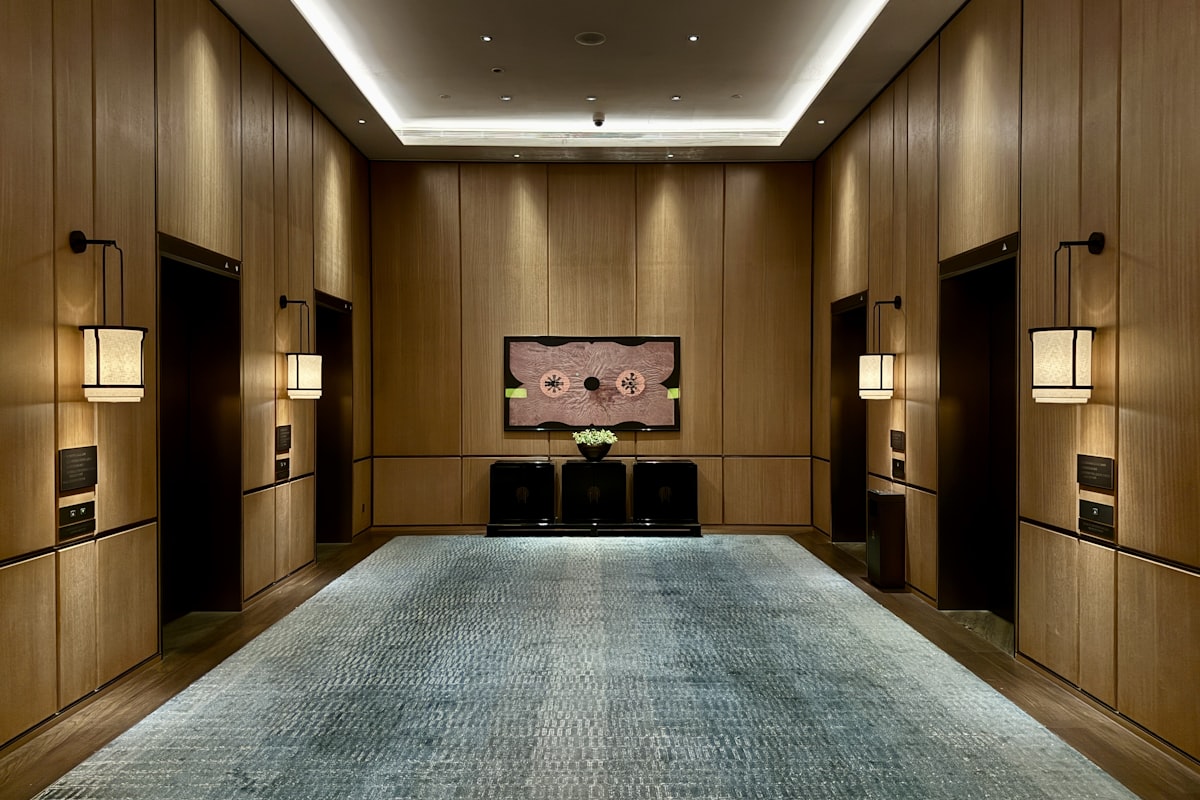
Buying art for a boutique hotel is a different discipline from buying it for a home. The individual choice matters less; the system matters more. Twenty rooms hung with the same print reads as a chain. Twenty rooms hung with twenty unrelated prints reads as a jumble. Getting between those two is the whole job.
The scheme: one thread, many variations
The workable structure is a single unifying constraint held across the property, with genuine variation inside it. Pick one of these to hold constant:
- One medium. All photography, or all works on paper. The most flexible constraint and the easiest to source depth within.
- One palette. All monochrome, or all within a warm tonal range. Visually the strongest, and it makes framing decisions trivial.
- One subject family. Landscape of the region, architecture, water. Ties the property to its place, which is usually the point of a boutique property.
- One artist or small group. The strongest identity and the biggest risk — it depends entirely on the artist having enough range.
Then vary everything else. In practice, monochrome photography is the most common choice in this sector because it satisfies the palette constraint absolutely while allowing complete freedom of subject — the black-and-white collection is the depth for that approach.
Zoning: the public rooms and the guest rooms do different jobs
These want opposite things and are frequently specified as though they want the same.
Public spaces — lobby, bar, restaurant, corridors
These want statement scale and a point of view. A guest forms an impression in the first thirty seconds, and a large, confident piece is the most efficient way to establish that a property has been thought about. This is where to spend disproportionately: one large work in the lobby does more than the entire guest-room budget. The larger-format works are the pool for it.
Corridors are the exception — viewed close and in motion, so a sequence of smaller pieces at regular intervals works better than one large one.
Guest rooms — restraint
Guest rooms want art that recedes. A guest is in that room to sleep, work and decompress, and a demanding piece in a bedroom is genuinely tiring after two nights. Calm subjects, low-to-moderate contrast, nothing narratively insistent. The rule of thumb: would this be pleasant to wake up to on the third morning?
Above the bed is the primary position, sized to about two-thirds of the headboard width. Our bedroom guide covers the placement logic in detail.
Durability and specification
Hospitality is harder on art than domestic use — more traffic, cleaning contact, and no one who feels ownership of it.
- Acrylic, not glass, in guest rooms and anywhere within reach. Lighter, does not shatter, and a broken frame in an occupied room is a real operational problem.
- Security fixings in guest rooms and corridors. Two-point hanging with a locking plate, or cleat-mounted.
- Anti-reflective glazing wherever the property will be photographed, which is most of it.
- Archival pigment on quality paper. Hotel corridors and lobbies are lit continuously, which is a far heavier light load than a domestic wall. Dye-based prints will visibly shift within a couple of years under that. The process comparison covers why.
- Buy from a current edition so damaged pieces can be replaced like for like rather than breaking the scheme.
Licensing: get this right before you buy
More consequential here than in a private setting, because a hotel is a commercial premises and marketing is central to the business.
Buying a print transfers ownership of the object, not copyright in the image. For a hotel that means:
- Displaying it in the property is fine — including in public areas.
- Incidental appearance in photographs of the room is normally fine.
- Using the artwork as brand or marketing material is not — website banners cropped from the work, printed collateral, room keys, menus, merchandise.
If any part of the intended use goes past hanging it and photographing the room, raise it before ordering. Wider licences can usually be arranged, and it is a short conversation in advance and an awkward one afterwards. Reach us via the contact page.
Practical notes on volume
Editions are finite. Every work here is an edition of 25, and the product-page counter shows how many remain. If a scheme needs eight copies of one image, check availability before specifying it — and consider whether eight identical prints is the right answer rather than eight works sharing a thread.
Prints ship unframed and rolled, which for a property is usually an advantage: framing locally to one consistent specification is cheaper than shipping glazed frames, and lets you match mouldings to the interior scheme.
Order a sample first. One print, in the actual room, under the actual lighting. Hotel lighting is warmer and lower than domestic lighting and changes how a print reads more than most people expect.
For a specification covering a whole property, or for questions about edition availability across multiple works, get in touch before ordering — it is much easier to plan around what is available than to redesign a scheme around a sold-out edition.
Frequently asked questions
- How do I choose art for a boutique hotel without it looking repetitive?
- Hold one constraint across the whole property — one medium, one palette, one subject family or one artist group — and vary everything else within it. Monochrome photography is the most common choice in the sector because it fixes the palette absolutely while allowing complete freedom of subject.
- Should hotel guest rooms and public areas have different art?
- Yes, they do opposite jobs. Public spaces want statement scale and a clear point of view, and are where to spend disproportionately. Guest rooms want art that recedes — calm subjects, moderate contrast, nothing insistent. The test is whether it is pleasant to wake up to on the third morning.
- Can a hotel use artwork it has bought in its marketing?
- Displaying it in the property is fine, and incidental appearance in room photographs normally is too. Using the artwork as brand or marketing material — cropped website banners, printed collateral, menus, merchandise — is not covered by buying the print. Wider licences can usually be arranged in advance.
- What should be specified for durability in hospitality?
- Acrylic rather than glass anywhere within reach, security fixings in guest rooms and corridors, anti-reflective glazing wherever the property is photographed, and archival pigment inks — hotel spaces are lit continuously, which is a far heavier light load than a domestic wall.
- Can I order multiple copies of the same print for a hotel?
- Up to the edition, which is 25 per work here, and the product-page counter shows how many remain. Check availability before specifying a repeated image — and consider whether several works sharing a common thread would serve the scheme better than identical copies.
- Should hotel art be bought framed or unframed?
- Unframed is usually better for a property. Framing locally to one consistent specification costs less than shipping glazed frames and lets you match mouldings to the interior scheme. Prints here ship unframed and rolled in protective tubes.