Premium Photos
What Makes a Fine-Art Print Valuable?
By Alexander van der Meer·· 5 min read
Five factors set the value of a print. Two of them are within your control at the moment of buying, one is pure luck, and two are widely overrated.
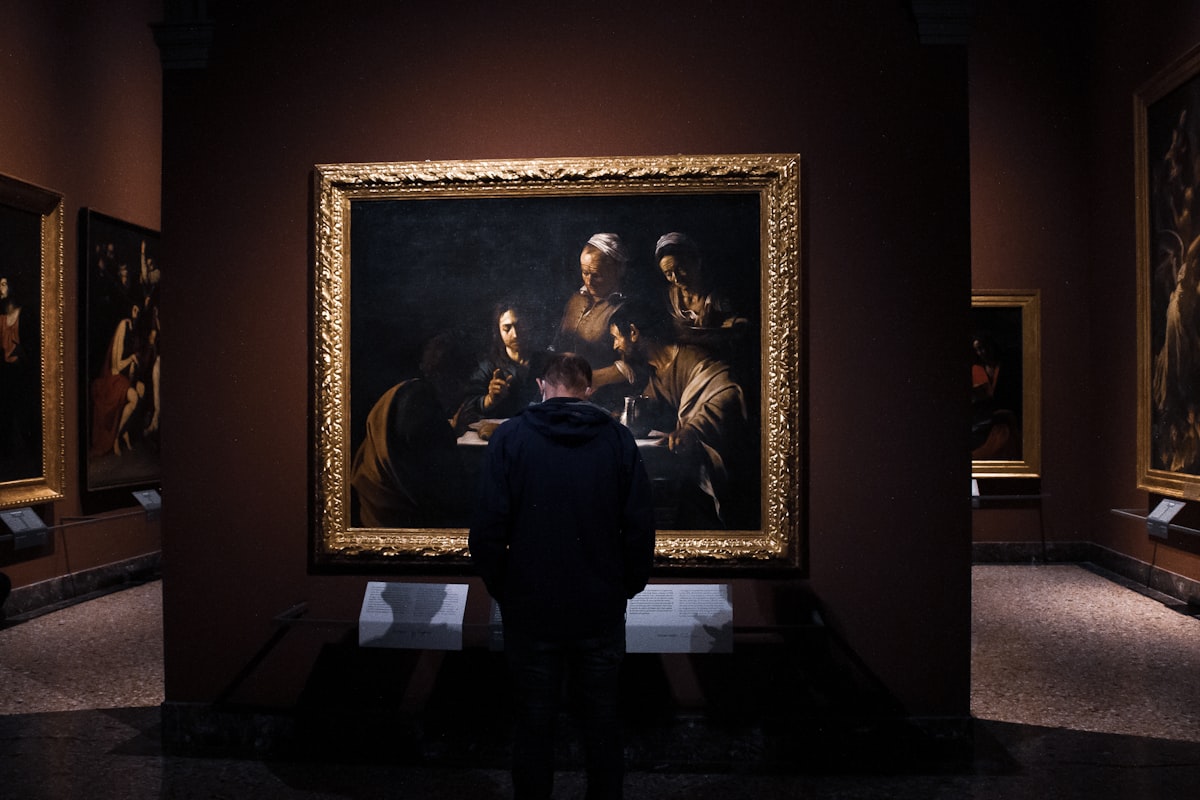
"Valuable" is doing two jobs in this question. It can mean *what will this be worth later*, and it can mean *am I getting my money's worth now*. They have different answers, and conflating them is how people end up disappointed in both directions.
Here is what actually drives each.
1. Edition scarcity — the biggest lever
A print's value floor is set by how many exist. This is straightforward supply: an image in an edition of 10 has ten possible owners, and if more than ten people want it the price has somewhere to go. An open edition has no ceiling on supply and therefore no floor under price.
What matters is not just the number but whether it is honoured — whether the work is genuinely not reprinted in that format once the run completes, and whether there is a shadow edition of proofs alongside it. Our limited vs open edition comparison covers the economics in detail.
Every work here is an edition of 25 with no separate proof run, and the counter on each product page shows how many have actually sold.
2. The artist's trajectory — the biggest mover, and pure luck
Nearly all dramatic appreciation in prints comes from the artist becoming more significant: exhibitions, institutional acquisitions, critical attention, a market forming. This dwarfs every other factor.
It is also the one you cannot plan around. By the time an artist's trajectory is legible, the early prices are gone; and the great majority of working artists, including excellent ones, never see it happen. Anyone selling you a print on the strength of predicted appreciation is selling you a lottery ticket with an art-shaped cover.
The rational stance: buy work you want to own from artists you rate, and treat trajectory as weather rather than as a plan.
3. Print quality and permanence — value you can verify
This is where "worth my money now" gets a real answer, because it is checkable before you buy.
Archival pigment inks on acid-free cotton or premium photographic paper are rated in decades of display. Dye-based inks on ordinary stock can shift visibly within a few years. A print that has faded is not a cheaper version of the same work — it is a damaged one, and it has no resale value at all. Permanence is not a luxury feature; it is the precondition for a print being worth anything later.
Quality within that is mostly tonal separation — whether shadows stay distinct rather than collapsing to flat black. The process comparison covers what each printing method does here.
4. Provenance and documentation
An undocumented print is worth what someone will pay for the picture. A documented one is worth what someone will pay for the artwork. The gap is large and it costs nothing to stay on the right side of it.
You need: a hand signature, the edition number, and a certificate that names your specific print rather than the edition in general. Then keep the certificate and the original invoice together. Fifteen years on, those two pieces of paper are the provenance.
5. Condition
Value is preserved rather than created here, but it is preserved or destroyed completely. Light is the main enemy — direct sun fades any print from any gallery. Then humidity, which cockles cotton papers, and handling, which leaves permanent marks on some surfaces.
UV-filtering glazing and a wall out of the sun's path is essentially the whole of the answer. The care guide has the specifics.
Two things buyers consistently overrate
The edition number itself
1/25 is not worth more than 20/25 in photographic or digital printing, because there is no plate wearing down between them — they are physically identical. The premium is a hangover from traditional printmaking. See what 1/25 actually means.
Size
Bigger prints cost more and command more wall presence, but they do not appreciate faster. A large print of a weak image is a large weak image. Buy the size the wall needs, not the size the price list implies is more serious.
The short version
Two factors you control at purchase — a real, finite edition and verifiable print quality with documentation. One you cannot control at all — the artist's trajectory. Two you should ignore — your position in the run, and scale as a proxy for seriousness.
Buy accordingly, and the print is worth your money the day it arrives regardless of what happens afterwards. Prints here start at €65, all hand-signed, all editions of 25, all with a certificate naming your number.
Frequently asked questions
- What makes a fine-art print valuable?
- Five factors: a genuinely finite edition, the artist's standing, archival print quality, documented provenance, and condition. Edition scarcity sets the floor and the artist's trajectory does most of the moving — but only quality, documentation and edition are verifiable at the moment you buy.
- Do art prints hold their value?
- Signed limited-edition prints on archival materials hold value considerably better than open editions or posters, which have effectively none. Real appreciation, though, depends almost entirely on the artist's reputation growing — which is unpredictable and should not be the reason you buy.
- Does a lower edition number make a print more valuable?
- Not in photographic or digital printing. Print 1 and print 25 come off the same file at the same settings and are physically identical. The low-number premium is a hangover from traditional printmaking, where the plate wore down as the run progressed.
- Do bigger prints appreciate more?
- No. Larger formats cost more and hold a wall better, but size is not a driver of appreciation — a large print of a weak image is simply a large weak image. Buy the size the wall needs rather than treating scale as a proxy for seriousness.
- How much does print quality affect value?
- Completely, because permanence is the precondition for future value. A faded print is a damaged one with no resale value, not a cheaper version of the same work. Archival pigment inks on acid-free paper are rated in decades; dye inks on ordinary stock can shift within a few years.
- What documentation should a valuable print come with?
- A hand signature, the edition number, and a certificate of authenticity naming your specific print — the work, artist, your number in the run, the format and the date. Keep it with the original invoice; together they form the provenance record.