Mixed Media
Understanding Mixed-Media Art
By Alexander van der Meer·· 3 min read· Updated
Painting, illustration, collage and digital technique in a single frame — what mixed-media art actually is, how to read it, and why collectors are drawn to it.
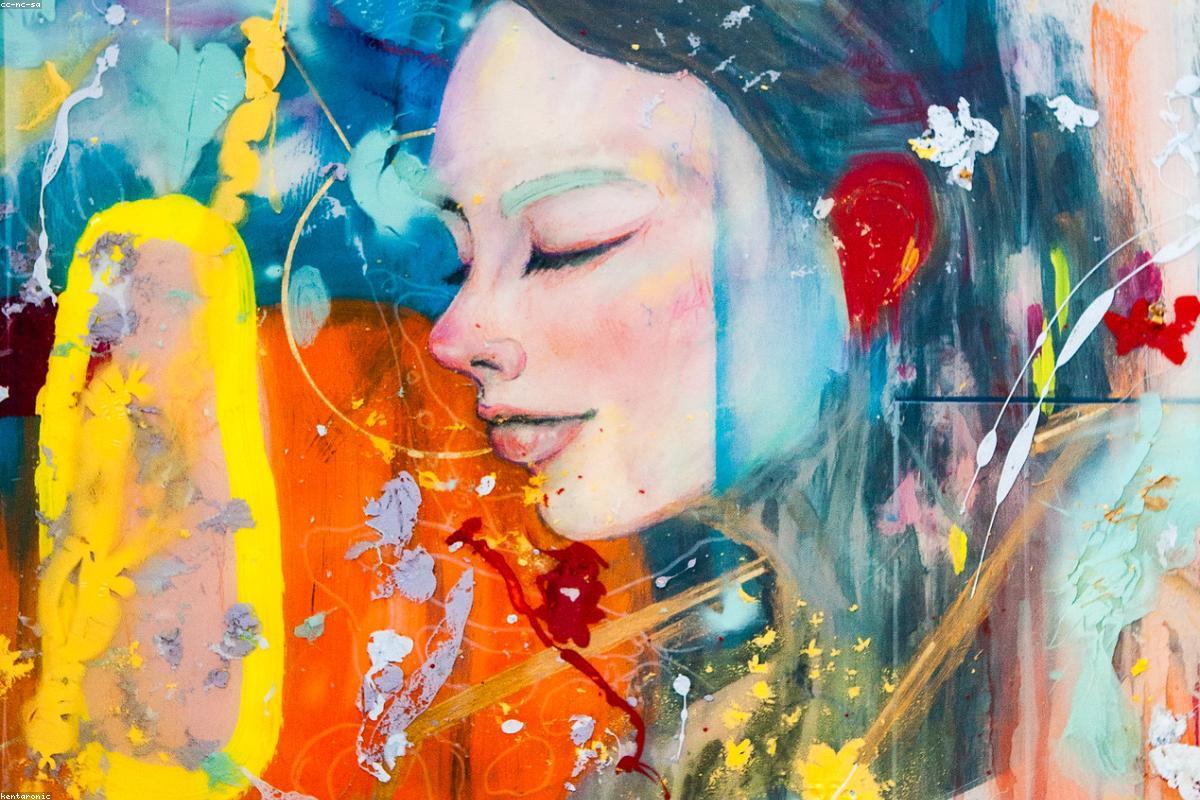
Mixed-media art refuses to sit in one category. By combining painting, illustration, collage and digital work in a single piece, it layers texture and meaning in ways any one medium rarely can — and that layering is exactly what collectors respond to.
What counts as mixed media?
The definition is simple: any artwork made using more than one medium or technique. In practice that covers an enormous range — paint over photography, ink and collage, hand-drawn elements composited digitally, or texture built physically and then reworked on screen.
What unites them is process. A mixed-media work is built in stages, and each stage leaves evidence. That accumulation is the point.
How it differs from related terms
- Collage assembles existing material — paper, photographs, print — onto a surface. It is one technique that often appears within mixed media, but mixed media is broader.
- Digital art is made natively on screen. Mixed media may include digital stages, but usually combines them with physical mark-making.
- Multimedia refers to work spanning formats — sound, video, installation — rather than layered materials in a single still image.
Depth you can see
The interplay of techniques gives mixed-media work a sense of depth and movement that a single medium struggles to reach. A brushstroke sitting over a photographic surface reads differently from either element alone: the eye keeps resolving which layer is on top.
Pop-art portraits, surreal compositions and richly layered scenes all reward a second, closer look — and then a third. That is a useful property in a home, where you live with a picture rather than passing it in a gallery.
How to read a mixed-media piece
Try looking in this order: first the overall composition from a few metres back, then the layers close up, then the edges — where the artist's process is usually most visible. Work that survives all three viewings is work worth owning.
A statement piece for modern interiors
Because mixed-media work tends to be bold and colour-forward, it makes a natural focal point. The practical implication: give it a neutral wall and let it lead. Hung on a busy patterned wall or crowded among other colourful pieces, the layering that makes it interesting turns into noise.
One mixed-media work can set the tone for an entire room — see our statement pieces collection for works that can carry that weight.
Framing mixed media
Layered, colour-rich images can take a wider or warmer frame than photography does. Keep the mat neutral — white or off-white — so it does not add a fourth colour conversation to an image that already has plenty. Full details in our framing guide.
Where to look
Mixed media is the largest category in our catalogue, and the most varied. Explore the mixed-media collection to find your statement piece, or browse curated groupings like Surreal & Dreamlike and Abstract.
Every piece is hand-signed by the artist, printed on premium photographic paper, and shipped unframed in a protective tube — ready to frame the way the work deserves.
Frequently asked questions
- What is mixed-media art?
- Mixed-media art is any artwork made using more than one medium or technique — for example paint over photography, ink combined with collage, or hand-drawn elements composited digitally. It is built in stages, and each stage remains visible.
- What is the difference between mixed media and collage?
- Collage specifically means assembling existing materials such as paper or photographs onto a surface. It is one technique that often appears within mixed media, but mixed media covers any combination of two or more techniques.
- Where should I hang a mixed-media print?
- On a neutral wall, with room around it. Mixed-media work is usually bold and layered, so it performs best as a single focal point rather than competing with patterned walls or other colourful pieces.
- How should mixed-media art be framed?
- A wider or warmer frame suits layered, colour-rich work, but keep the mat neutral — white or off-white — so it does not introduce another colour into an image that already carries several.