Modern & Contemporary Art
Limited Edition vs Open Edition
By Alexander van der Meer·· 5 min read
The difference is not quality — it is economics. What edition size actually does to price, to resale, and to what happens when the run ends.
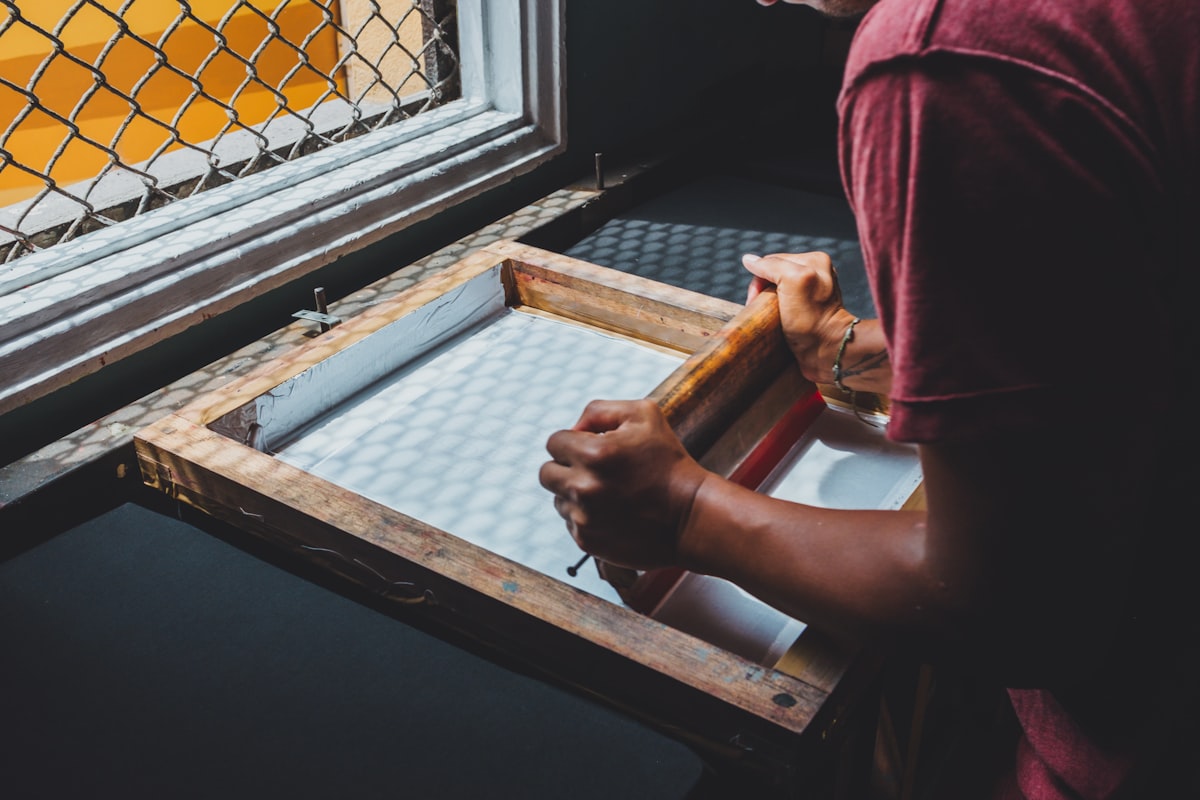
An open edition and a limited edition can be the same image, the same paper, the same ink and the same printer. Physically they may be indistinguishable. The difference is entirely economic, and it is worth understanding on its own terms rather than as a quality claim.
If what you want is the provenance and paperwork side — signatures, certificates, what documentation to keep — our collector's guide to signed and limited editions covers that. This piece is about the numbers.
The definitions
Open edition: printed on demand, indefinitely, in any quantity the market wants. Supply expands to meet demand.
Limited edition: a stated maximum number of prints in a given format, after which the work is not printed again in that format. Supply is fixed before the first sale.
That is the whole distinction. Everything else follows from it.
What fixing supply actually does
Price behaves differently
With open editions, price is set by production cost plus margin and stays roughly flat forever, because the seller can always make one more. With limited editions, price is set at launch against a fixed supply — and if demand exceeds that supply, the only place the price can move is up, on the secondary market.
The corollary matters just as much: if demand never exceeds supply, a limited edition behaves exactly like an open one, and the "limited" adds nothing but a number on the back. Most limited editions never sell out. This is normal and is not a scandal — it just means scarcity is a possibility being purchased, not a guarantee.
Resale becomes possible at all
Open editions have essentially no secondary market, for an obvious reason: nobody buys used what they can buy new at list price in perfect condition. A limited edition that has sold out has no such competition, and that is the only circumstance under which a print has somewhere to trade.
The seller takes on an obligation
This is the part that gets least attention. Declaring an edition of 25 is a commitment to leave money on the table — to refuse the 26th sale of a work that is selling well. An open edition carries no such constraint.
Which is why the honesty of the edition matters more than its size. A "limited edition of 25" that reappears as a different size, or with forty artist's proofs alongside it, was never limited in the sense that affects price.
Why 25 rather than 250 — or 5
Edition size is a deliberate trade-off between three things, and there is no optimum, only a position.
- Very short runs (1–10) maximise scarcity and price per print, and put the work out of reach for most buyers. The artist earns from few sales at high prices, and the work is seen by very few people.
- Very long runs (250+) make the work accessible and earn steadily, but supply almost never binds, so the edition number is decorative in practice.
- Short-to-mid runs (roughly 20–50) keep first prints affordable while leaving a real possibility that the run completes.
Every work in this gallery is an edition of 25, with no separate proof run inflating the true total. That number is deliberately in the middle band: small enough that selling out is a realistic outcome rather than a theoretical one, large enough that a first print starts at €65 rather than at several hundred.
What happens when an edition sells out
Three things, in order.
- The work leaves the shop. It is not reprinted in that format. This is the commitment the edition consists of.
- Existing owners become the only supply. Any further demand has to go through them, which is the mechanism by which a print can appreciate at all.
- Documentation starts to matter. With no new prints available, a buyer's only assurance is the signature, number and certificate. This is why the paperwork you file away on day one is worth keeping.
The counter on each product page here shows how many of the 25 have sold, and it moves when an order is paid for rather than being set by hand — so you can see where a work actually stands rather than taking a scarcity claim on trust.
Which should you buy?
If you want something good-looking on a wall and do not care about resale, an open edition is a perfectly rational purchase and usually cheaper. There is no shame in the decorative market — most art bought is bought for decoration, and that is what art is largely for.
If you want the print to be an object with a defined identity — one of a known number, signed, documented, with the possibility of being worth something to somebody later — you want a limited edition, and you want to check that the limit is real.
Four questions do that checking: What is the edition size? Are there proofs outside it? Does the same image exist as a separate edition in other formats? Can I see how many have sold?
Frequently asked questions
- What is the difference between a limited edition and an open edition print?
- Supply. An open edition is printed on demand indefinitely; a limited edition has a stated maximum number of prints in that format, after which the work is not reprinted. The prints can be physically identical — the difference is economic, not a quality claim.
- Are limited edition prints worth more?
- They can be, but only if demand exceeds the edition size. A limited edition that never sells out behaves like an open edition in price terms. What you are buying is the possibility of scarcity, plus a defined identity for the object — not a guarantee of appreciation.
- Why is 25 a common edition size?
- It sits in the middle of a trade-off. Very short runs maximise scarcity but price most buyers out; runs over 250 are accessible but never actually bind, so the number is decorative. Around 20–50 keeps first prints affordable while leaving selling out a realistic outcome.
- What happens when a limited edition sells out?
- The work leaves the shop and is not reprinted in that format. Existing owners become the only source of supply, which is the mechanism by which a print can appreciate. At that point documentation — signature, number, certificate — is a buyer's only assurance.
- Can an artist reprint a limited edition in a different size?
- Some publishers do issue the same image as a separate edition in another format, which is legitimate if disclosed but does dilute scarcity. Ask whether other formats exist before buying, and treat silence on the question as an answer.
- Do open edition prints have any resale value?
- Effectively none. Nobody buys used what they can buy new at list price in perfect condition, and an open edition can always be reprinted. That is the practical consequence of unlimited supply rather than a comment on the quality of the print.