Contemporary
Living Room Wall Art Ideas That Actually Work
By Alexander van der Meer·· 4 min read· Updated
The living room is the hardest room to get right — multiple sightlines, mixed furniture, a television. Wall-by-wall ideas that hold up in real homes.
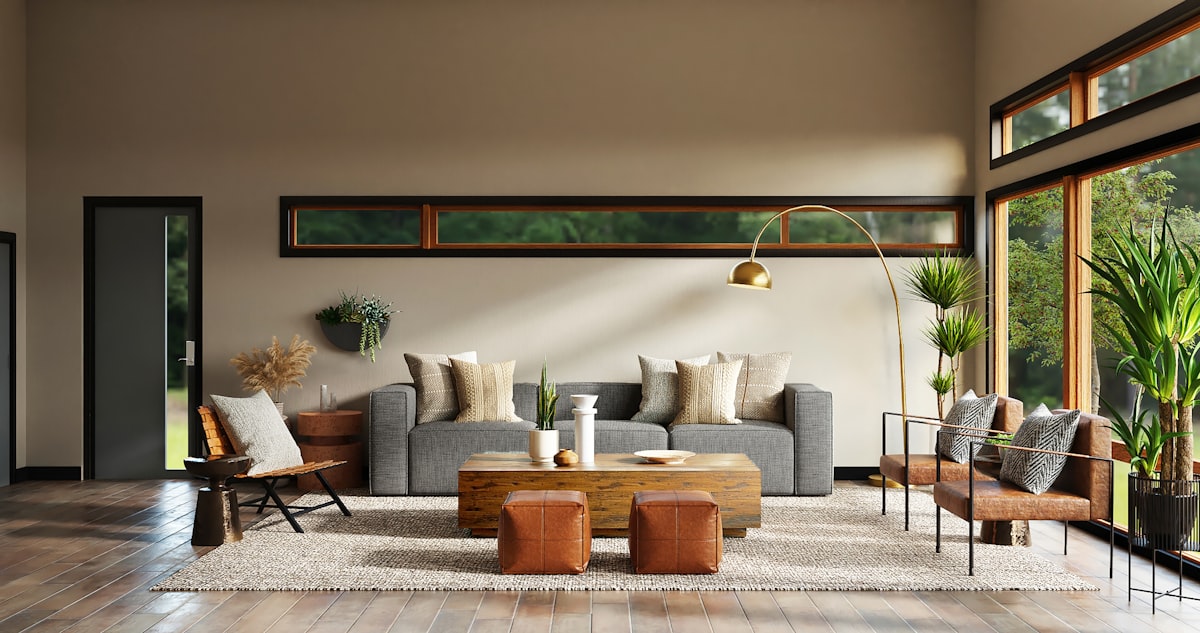
The living room is the hardest room in the house to hang art in. It has several sightlines, mismatched furniture heights, a television competing for attention, and it is the room guests actually see. It is also the room where getting it right changes the most.
Rather than general advice, here is a wall-by-wall approach.
The wall above the sofa
The default focal point, and the one most people undersize. You have three good options:
- One large piece. The cleanest solution. Aim for around two-thirds of the sofa width and leave 15–25 cm between the sofa back and the frame.
- A horizontal triptych. Three prints of equal size in a row, gaps even at 5–8 cm. Reads as calm and deliberate, and is easier to source than one very large piece.
- An asymmetric cluster. One anchor piece plus two or three smaller works, weighted slightly to one side. More casual, more forgiving of mixed sizes.
What rarely works is a single small print centred on a big sofa. If that is what you have, either group it with others or size up.
The blank wall opposite the seating
This is the wall you look at while sitting, which makes it the most-viewed surface in the house — and it is almost always neglected.
Because you view it from a distance and at length, choose work with depth: landscape, architecture, or an abstract with real tonal range. Images that reveal something new on the fifth viewing belong here. A statement piece earns its place on this wall more than anywhere else in the home.
The television wall
A black rectangle is not going away, so stop fighting it. Two approaches work:
Absorb it. Surround the TV with art in dark frames so the screen becomes one element among many. When it is off, it reads as part of the arrangement.
Ignore it. Leave the TV wall bare and put all the art elsewhere. Splitting attention between a screen and a mismatched picture beside it is what looks unresolved.
Whichever you choose, keep the art off-axis from the screen — directly above a TV is a difficult position both visually and practically, because of the heat and the viewing angle.
Alcoves, corners and narrow returns
Chimney-breast alcoves suit vertical work — a single tall print, or two stacked with consistent spacing. Narrow returns beside doorways take small pieces well, viewed close.
You can also lean rather than hang: a framed print resting on a shelf, mantel or sideboard reads as relaxed and lets you rotate pieces without touching the wall.
Choosing a palette for the room
Living rooms usually already contain a lot of colour — sofa, rug, cushions, books, plants. Two reliable strategies:
Go monochrome. Black-and-white photography sits above visual noise without adding to it. In a busy room, a monochrome piece often looks more sophisticated than anything colourful would.
Go single-accent. Pick one colour already in the room and choose art that carries it, letting everything else in the image stay muted. The wall then feels connected without matching.
If the room is genuinely neutral — grey, white, natural wood — then a bold mixed-media work can carry the whole scheme on its own.
Build it over time
The most convincing living rooms look accumulated, not delivered. Start with the sofa wall, live with it for a few weeks, and let the next piece answer the first.
Every ArtMarket print is hand-signed by the artist, produced on premium photographic paper, and shipped unframed in a protective tube so you can frame it to suit the room. Start with the living room art collection, browse by artist, or see the full catalogue.
Frequently asked questions
- What art should I hang above my sofa?
- One large piece, a horizontal triptych, or an asymmetric cluster anchored by one bigger work. In every case, the artwork should span roughly two-thirds of the sofa width and sit 15–25 cm above the sofa back.
- Should I hang art above the television?
- Usually not. Directly above a screen is awkward for viewing angle and heat. Either surround the TV with art in dark frames so it reads as part of an arrangement, or leave that wall bare and place the art elsewhere.
- What colour art works best in a living room?
- In a room that already has a lot of colour, black-and-white photography adds impact without visual noise. In a genuinely neutral room, one bold colourful piece can carry the whole scheme.
- How many pieces of art does a living room need?
- Start with one considered piece on the sofa wall and add over time. Rooms that look accumulated read better than rooms furnished with art all at once — and it lets each new piece answer the last.