Premium Photos
What Is Fine-Art Photography?
By Alexander van der Meer·· 6 min read
The term gets used loosely enough to mean almost nothing. Here is the distinction that actually holds: intent, control over the print, and a finite edition.
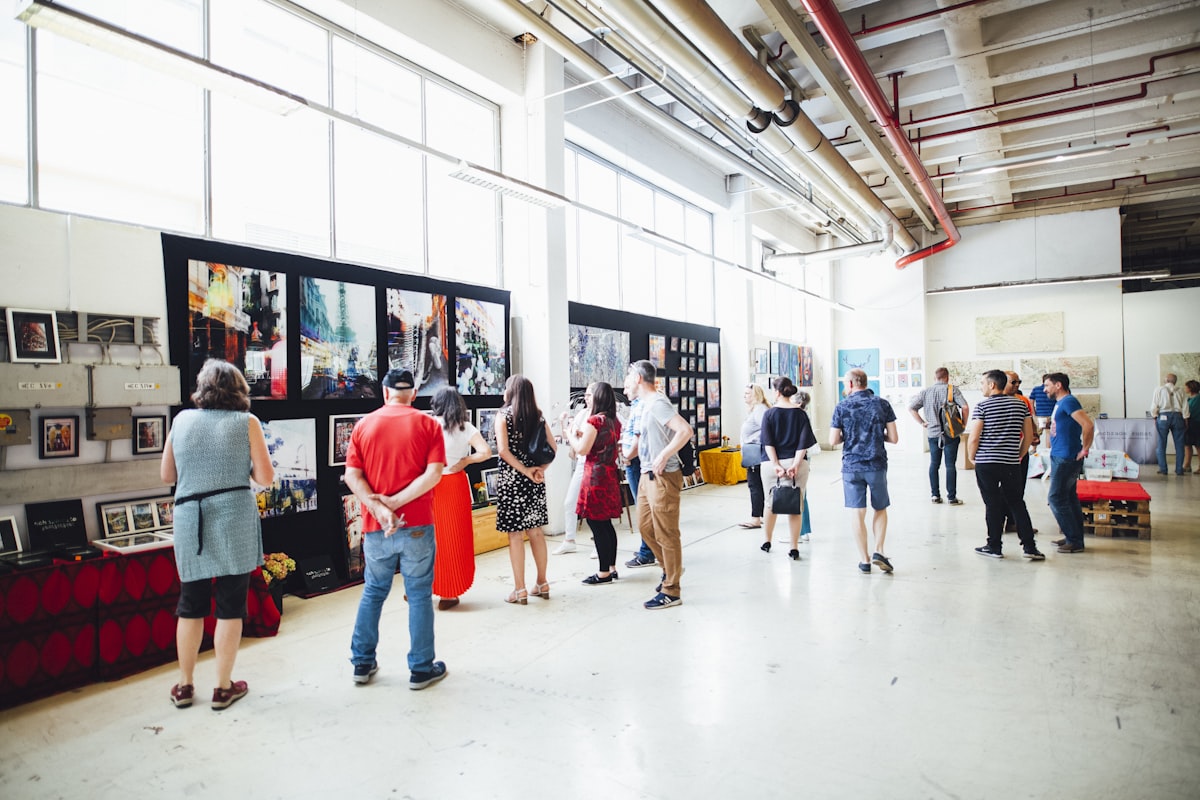
"Fine-art photography" is one of those phrases that has been stretched until it nearly snapped. It appears on gallery walls and on stock-image listings, on €4,000 prints and on €12 posters. If you are about to spend real money on a photograph, it helps to know which parts of the term mean something and which parts are decoration.
There is a workable definition. Fine-art photography is photography made as an end in itself, where the photographer controls the print as well as the image, and where the print is issued in a finite quantity. Three conditions — intent, control, scarcity. Most of the confusion comes from work that satisfies one and borrows the label for the other two.
Intent: made for its own sake
The first and least measurable condition is why the photograph exists. Commercial photography exists to sell something; the image serves a product, a brand or a headline. Documentary and photojournalism exist to record something; the image serves an event. Fine-art photography exists because the photographer wanted to make that image, and it answers to nothing outside itself.
This is not a quality judgement. A great deal of commercial and documentary photography is better than a great deal of fine-art photography, and plenty of images cross over — Irving Penn shot advertising and Robert Frank shot the street, and museums collect both. But the distinction still does work: it tells you what the photographer was optimising for, and therefore what you are looking at when you look at the print.
How you can tell
Look for a body of work rather than a single image. A fine-art photographer is usually pursuing something across many frames — a subject, a light, a formal problem — and the individual print is one instance of that pursuit. A single striking picture with nothing around it is more often a lucky frame than an artistic position, and it tends to be priced accordingly.
Control: the print is part of the work
This is the condition most people miss, and it is the one that separates a fine-art print from a reproduction of a photograph.
In fine-art practice the print is not an output, it is the artwork. The photographer decides the paper, the size, the tonal treatment and the crop, and those decisions are as much part of the piece as the exposure was. Two prints of the same negative on different papers are genuinely different works — one may hold detail in the shadows that the other loses entirely, and the photographer chose which.
Compare that with a poster. A poster is an image licensed and printed at whatever size and on whatever stock the seller found economical, usually without the photographer's involvement and often without their knowledge. The picture may be identical. The object is not.
What to look for on the listing
- Named paper. "Premium photographic paper", "archival pigment on cotton rag", a specific brand — anything that shows the surface was chosen. Silence about the paper usually means it was not.
- Specified dimensions rather than "available in all sizes". An artwork sized to order is a reproduction being sold as one.
- A named photographer. If nobody is credited, nobody made a decision about the print.
Our own guide to print quality goes further into what the different processes do to an image, and the three-way process comparison covers the chemistry.
Scarcity: the edition
The third condition is that the print run ends. A fine-art photograph is issued as a limited edition — a stated number of prints, after which that work is not printed again in that format. The number is a commitment, not a marketing device, and it is the reason a photograph can hold value at all in a medium where the file could be printed infinitely.
Every work in this gallery is an edition of 25. Each print is hand-signed by the photographer, usually on the reverse so the signature sits outside the image, and travels with a certificate of authenticity filled in by hand naming the work, the artist, your number in the run, the format and the date. The counter on each product page shows how many of the 25 have actually sold, and it moves when an order is paid for rather than being set by hand.
What fine-art photography is not
It is not a genre. Landscape, portrait, still life, abstract and street can all be fine-art photography or not, depending on the three conditions above. There is nothing inherently more artistic about a misty mountain than about a shop window.
It is not the same as "expensive". Price follows the artist's reputation and the edition size far more than it follows craft, which is why a first print by an unknown photographer can be better made than one costing twenty times as much.
And it is not the same as "printed on nice paper". Paper is necessary and not sufficient. A licensed stock image on cotton rag is a well-printed stock image.
Where to start looking
If the definition above appeals to you, the practical way in is to browse by what the photographer was after rather than by subject. Monochrome work makes the print decisions most visible, because with no colour to carry the image everything depends on how the tones were handled. Landscape work shows the opposite — patience and return visits rather than treatment.
Prints start at €65, ship unframed and rolled in a protective tube, and can be returned within 14 days if the piece is not right on the wall.
Frequently asked questions
- What is fine-art photography in simple terms?
- Photography made as an artwork in its own right, where the photographer controls the printing as well as the image, and where the print is issued in a limited, stated number. Commercial photography serves a product and documentary photography serves an event; fine-art photography answers only to itself.
- What is the difference between fine-art photography and a photo poster?
- Often the picture is the same and the object is not. A poster is an image licensed and printed at whatever size and stock was economical, usually without the photographer's involvement and in unlimited quantity. A fine-art print has a paper and size chosen by the photographer, a hand signature, and an edition that ends.
- Does fine-art photography have to be black and white?
- No. Monochrome is common because it makes the printing decisions visible, but colour work is equally fine-art photography. The distinction is about intent, control over the print and a finite edition, not about palette or subject.
- How can I tell if a photograph is really a limited edition?
- Look for a stated edition size, a hand signature, and a certificate naming your specific number in the run. A listing that says “limited edition” without saying limited to what is not making a commitment. Every work here is an edition of 25 with a live counter showing how many have sold.
- Is fine-art photography a good investment?
- Treat it as a purchase first. Photographs by established artists have appreciated, but the market is narrow, illiquid and driven by the artist's reputation rather than by the print itself. Buy work you want to live with at a price you are comfortable with, and treat any future value as a bonus rather than a plan.
- What paper is fine-art photography printed on?
- Most commonly archival cotton rag or premium photographic paper, chosen for how it holds tonal separation and how long it lasts. The paper is part of the artwork rather than a packaging decision, which is why a fine-art listing names it and a poster listing usually does not.