Contemporary
Art for Mediterranean Interiors
By Alexander van der Meer·· 5 min read
A Mediterranean room is a light problem solved with colour. That has a direct consequence for art — and it is the opposite of the advice for a Nordic room.
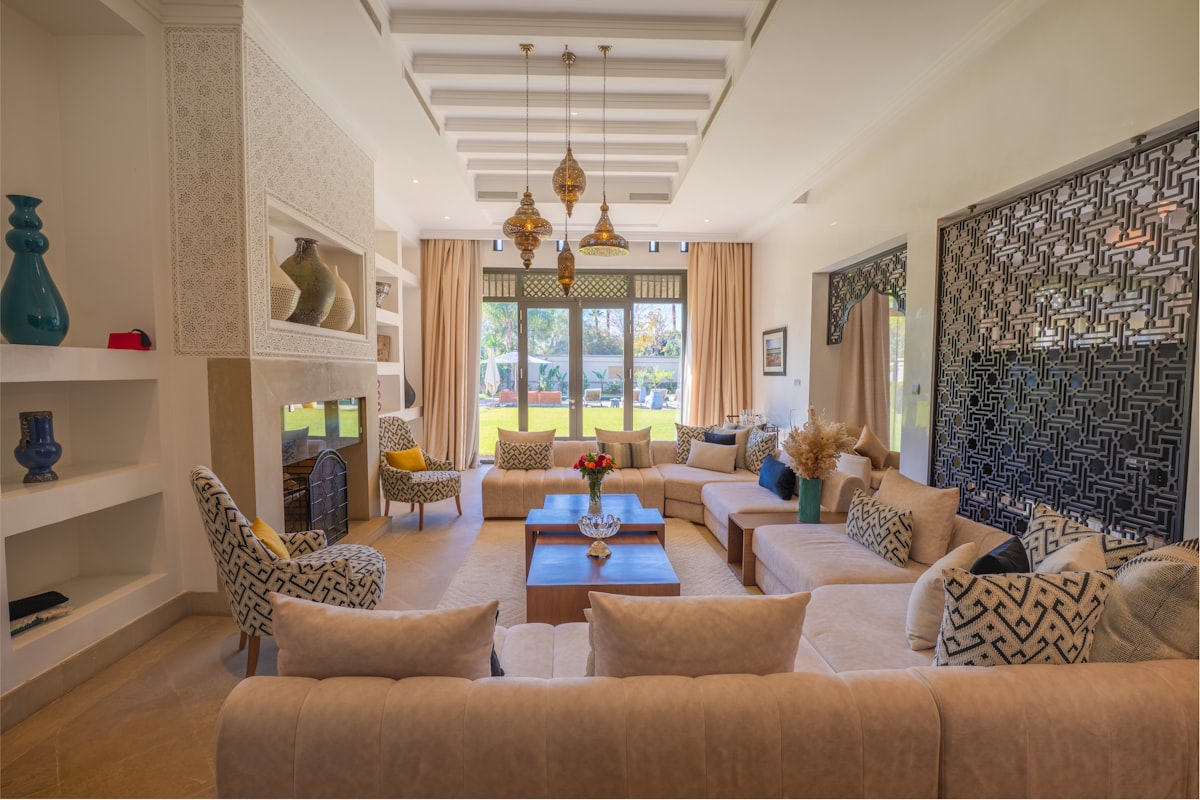
Everything in a Mediterranean interior exists because of how much light is in the room. Lime-washed white to bounce it, terracotta and olive to absorb it, deep blue to cool it down, and hard surfaces — stone, tile, plaster — that can take direct sun without fading.
Art has to survive the same conditions, and that changes what works in a way most style guides skip past.
Bright rooms flatten subtle images
This is the practical heart of it. A low-contrast, tonally subtle photograph that reads beautifully in a north-facing apartment can look washed out and slightly empty on a sunlit wall by ten in the morning. There is simply too much ambient light for the image's own range to register.
So the advice inverts relative to a Nordic room. Where a Scandinavian interior punishes anything loud, a Mediterranean one punishes anything quiet. You want work with enough contrast and saturation to hold its own: golden hour rather than grey, strong silhouettes, saturated blues, clear compositional structure visible from across the room.
What this rules in
- Silhouettes. Palms, cypresses, a figure against bright sky. Maximum contrast by construction, and unmistakably of the region.
- Warm landscape. Sunflower fields, sunlit meadows, dry hills at the end of the day.
- Deep blue water. The single most effective colour in the palette, for reasons below.
- Everyday southern life. A laundry line strung across a street, a table at dusk, a lighthouse over warm water. The style is informal and the art can be too.
The Mediterranean edit collects the gallery's work in this register, and the ocean and sea collection is the deeper pool if you want the water specifically.
The warm-to-cool ratio
Mediterranean palettes work because they are deliberately unbalanced — roughly three parts warm to one part cool. Sand, ochre, terracotta and olive dominate; deep blue punctuates.
Use the same ratio on the walls. A single blue-dominant piece in a warm room does an enormous amount of work. Three of them tip the balance and the room starts to feel cold and slightly nautical — the theme-park version of the style.
Conversely, if your walls are white and the furniture is pale, warm-toned art carries the room on its own and you may not need the blue at all.
Glare, and where not to hang
The obvious problem with a bright room is that glazing turns into a mirror.
The fix is placement rather than equipment: hang on a wall perpendicular to the window, not opposite it. A frame facing a window reflects the view for most of the day, and no glass entirely solves that. If the only available wall faces the window, use anti-reflective or matt glazing, or hang the print unframed.
And keep it out of the sun
Worth stating plainly, because this style puts more prints in direct sunlight than any other. Archival pigment inks on premium paper are rated in decades of normal indoor display — but hours of unfiltered direct sun will shorten that on any print from any gallery.
UV-filtering glazing helps substantially. A wall that never takes direct sun helps more. Our care guide covers the specifics.
Framing, and the case for none
Natural or limed oak, rattan, or a simple white frame. Heavy dark wood and anything gilded works against the informality of the style.
This is also one of the few interiors where leaving a print unframed genuinely suits the room. A clipped print, or one leaning on a shelf or against a plastered wall, reads as relaxed rather than unfinished — which is precisely the register the style is aiming for. Prints here ship unframed and rolled, so that option is available without any extra work.
Scale in a room with hard surfaces
Mediterranean rooms tend to have tile or stone floors, plastered walls and minimal soft furnishing, which makes them acoustically and visually hard. Small prints get lost in that.
Go larger than you would in a carpeted, curtained room — a single generous piece rather than three medium ones. The size guide has the standard dimensions if you are working out what the wall can take.
Prints start at €65, are hand-signed in editions of 25, and ship rolled in a protective tube with free EU delivery over €175.
Frequently asked questions
- What art suits a Mediterranean interior?
- Work with enough contrast and saturation to hold up in strong light — silhouettes of palms and cypresses, warm landscape, deep blue water, and informal scenes of southern life. Subtle low-contrast images tend to look washed out on a sunlit wall.
- Why do subtle prints look flat in a bright room?
- There is too much ambient light for the image's own tonal range to register. A low-contrast photograph that reads beautifully in a north-facing apartment can look empty on a sunlit wall by mid-morning. Bright rooms need images with clear structure visible from across the room.
- How much blue should a Mediterranean room have?
- About one part cool to three parts warm. A single blue-dominant piece in a warm room does an enormous amount of work; three of them tip the balance and the room starts to feel cold and nautical rather than Mediterranean.
- How do I stop glare on framed art in a sunny room?
- Hang on a wall perpendicular to the window rather than opposite it — a frame facing a window reflects the view for most of the day and no glass fully solves that. If the only wall faces the window, use anti-reflective or matt glazing, or hang the print unframed.
- Will strong sunlight damage an art print?
- Direct sun will fade any print from any gallery. Archival pigment inks on premium paper are rated in decades of normal indoor display, but hours of unfiltered daylight shortens that considerably. UV-filtering glazing helps; a wall out of the sun's path helps more.
- Can I hang prints unframed in a Mediterranean interior?
- Yes — this is one of the few styles where it genuinely suits the room. A clipped print, or one leaning against a plastered wall, reads as relaxed rather than unfinished, which matches the informality of the style. Prints here ship unframed and rolled.