Black & white
Hallway Wall Art: What to Hang Where Guests Walk In
By Alexander van der Meer·· 6 min read
The hallway is the first wall guests see and the one you pass most often yourself. Here is what to hang there, how big on a narrow wall, how high, and how to have it up before the holidays.
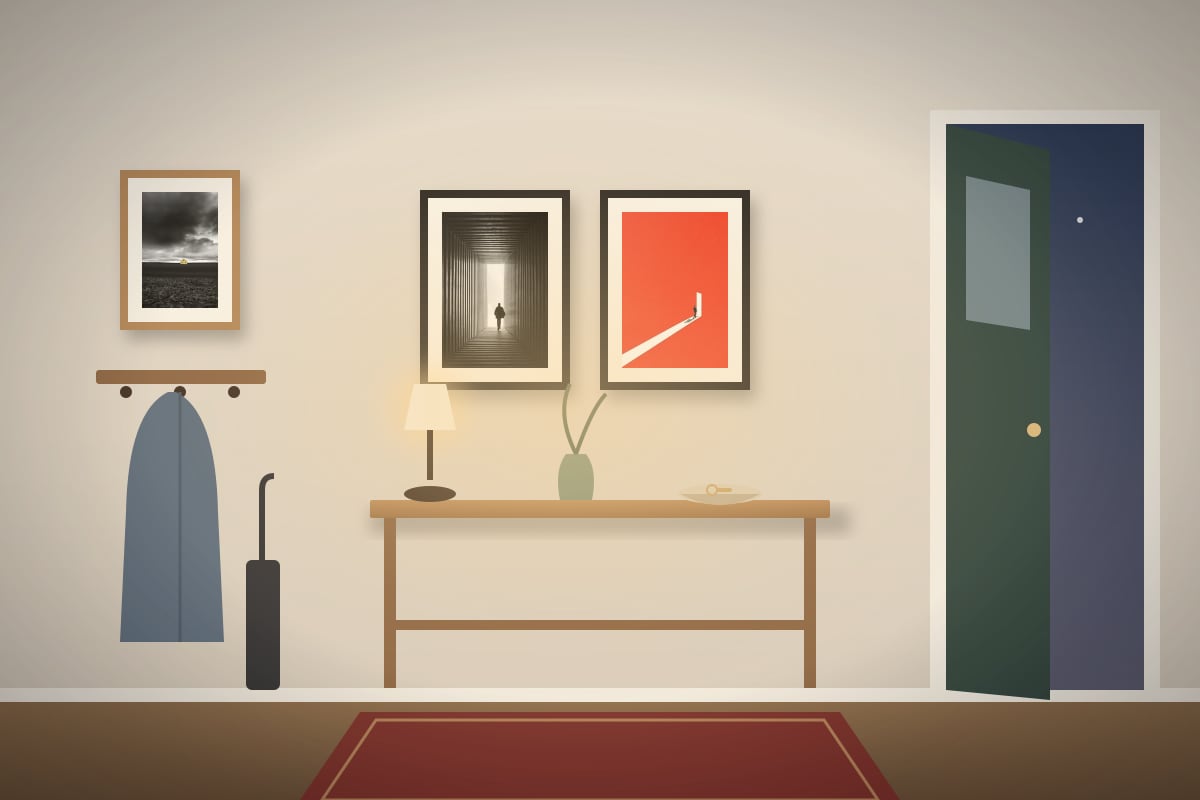
The best hallway wall art is seen up close and in passing, so choose work with a clear idea and fine detail rather than sheer size: one piece at the end of the corridor, a row of small prints along it, or a warm work above the console by the door. Hang it with its centre at about 145 cm, as you would standing in any room, and on a narrow wall stay with 40×30 cm prints and slim frames.
This guide covers three ways to dress a hallway with works from the gallery, the sizes that suit narrow walls and consoles, and the practical details of light, doors and coats.
What a hallway asks of art
A hallway is the only room nobody sits in. You see its walls from half a metre away, on the move, often in poor light, and you cannot step back to take in a large picture. That rules out most big statement pieces and favours work that rewards a short look: a strong composition, a single figure, a graphic idea. It is also the first thing a guest sees when the door opens, so it sets the tone for the whole home. A hallway that says something takes very little: one well-chosen work at the right height does more than a wall of small frames bought in a hurry.
Three ways to dress a hallway
One work at the end of the corridor
A long corridor already has a direction, and the wall at the end of it is the one place in a hallway you see from a distance. Give it a destination. Path to the Unknown by Moroz, a lone figure climbing a stairway through a tunnel of lines towards a bright opening, is €95 at 40×30 cm and repeats the depth of the corridor itself. Stepping Into the Unknown by Rodrigo, a small figure in black walking along a white path to an open door in a field of red, is €145 at the same size and gives a pale hallway one bold block of colour.
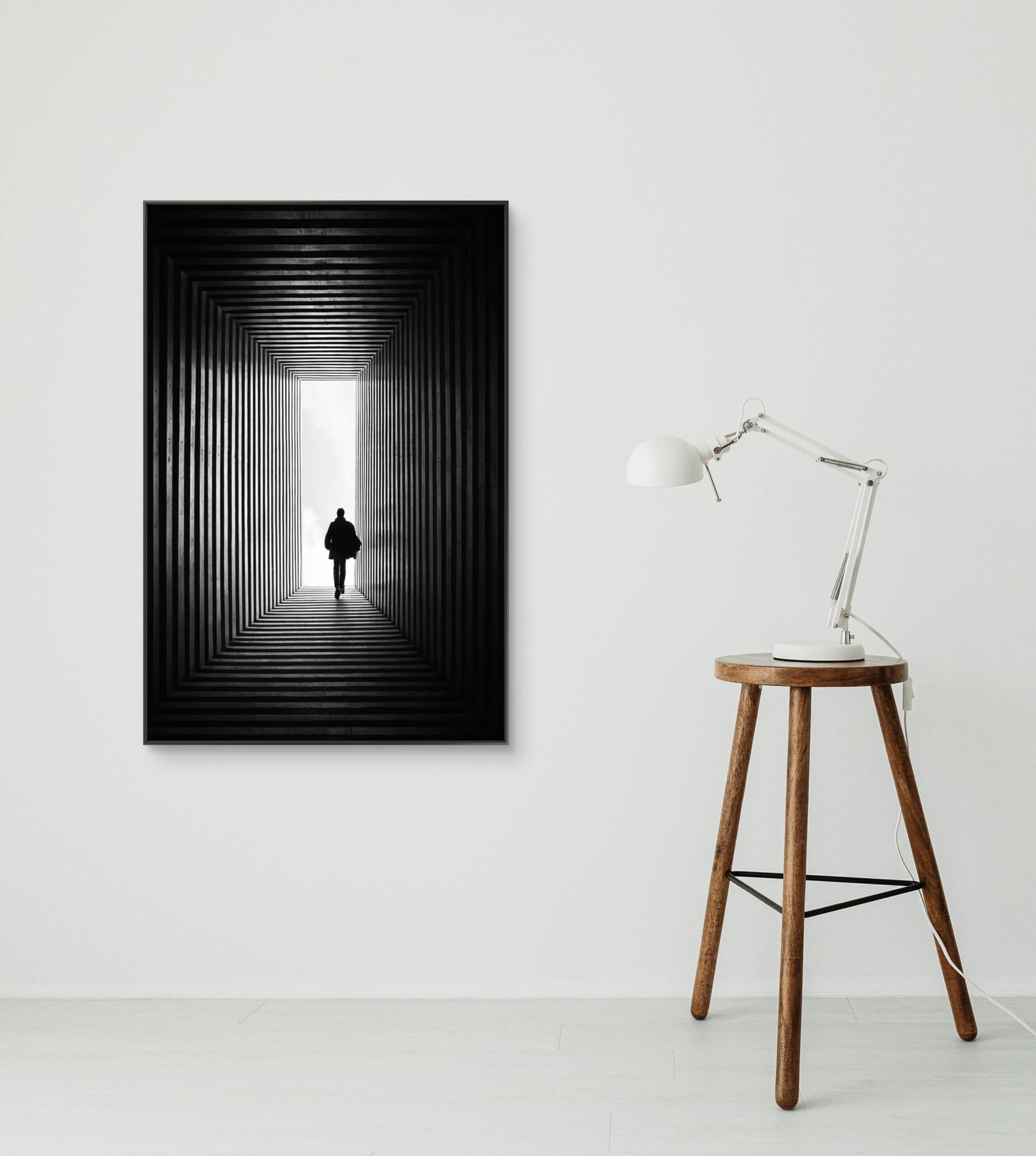
A row of three along the wall
Along the corridor itself, a sequence works better than one piece, because you meet the works one after another as you walk. The City Lines set brings together three black-and-white photographs by Moroz, a high-rise seen from the ground, a hand holding a light bulb with a flame inside, and two clasped fists, for €230 instead of €255 bought separately. Black and white holds up well in the low, mixed light of most hallways, and a single palette from one end to the other makes even a short corridor feel designed. More work in that register is in the black-and-white collection.
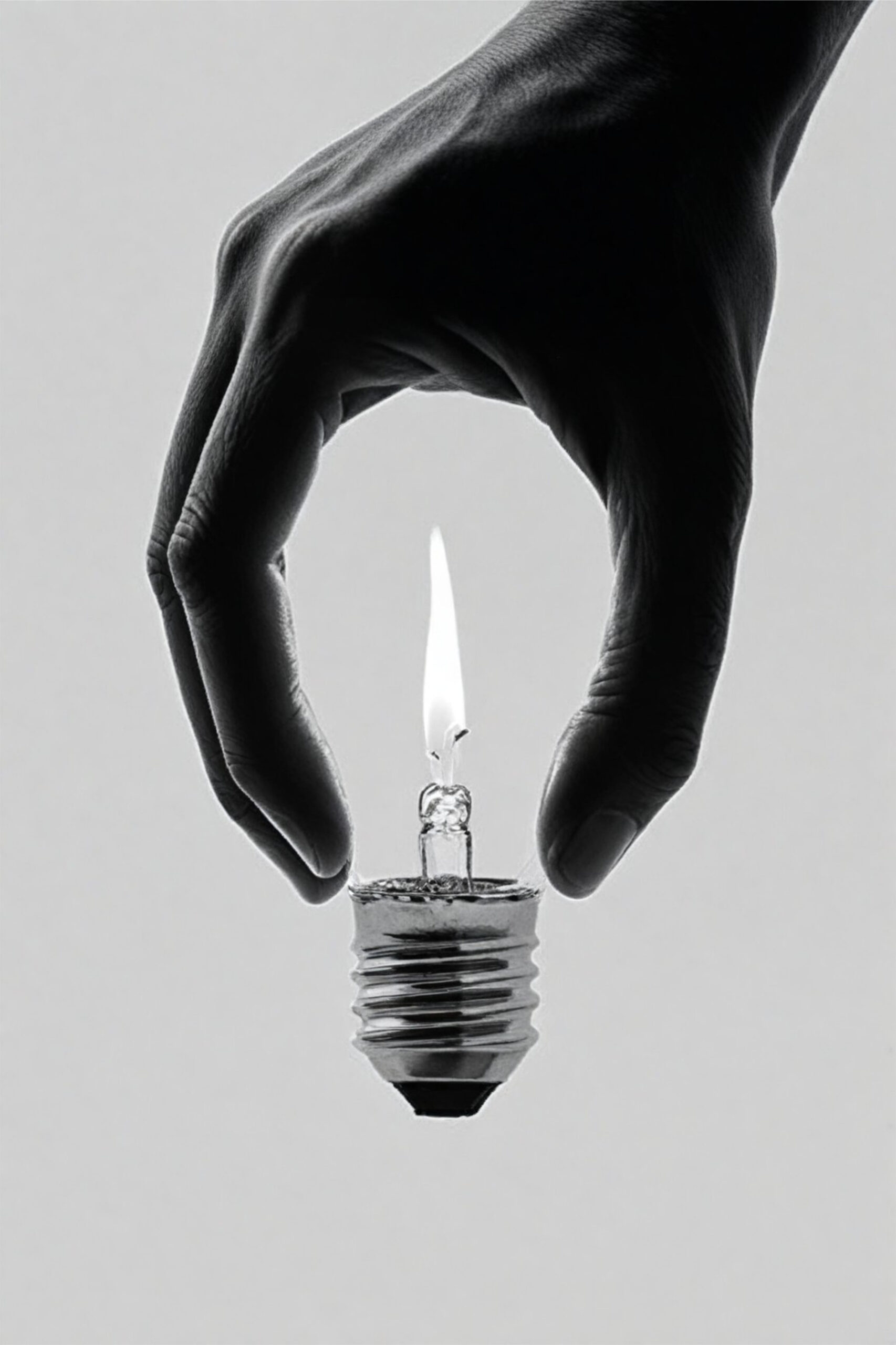
A warm welcome above the console
By the front door, where keys, post and gloves land on a narrow table or shelf, a welcoming picture does more than a graphic one. Beacon of Solitude by Bellucci, a lone yellow house glowing under a stormy sky, is €95 at 40×30 cm and says "home" to anyone coming in from the cold. For a wider console, Daisy Path by Henri des Bois, a path through wild daisies in soft yellow and green, is €145 at 60×40 cm and literally invites you in.
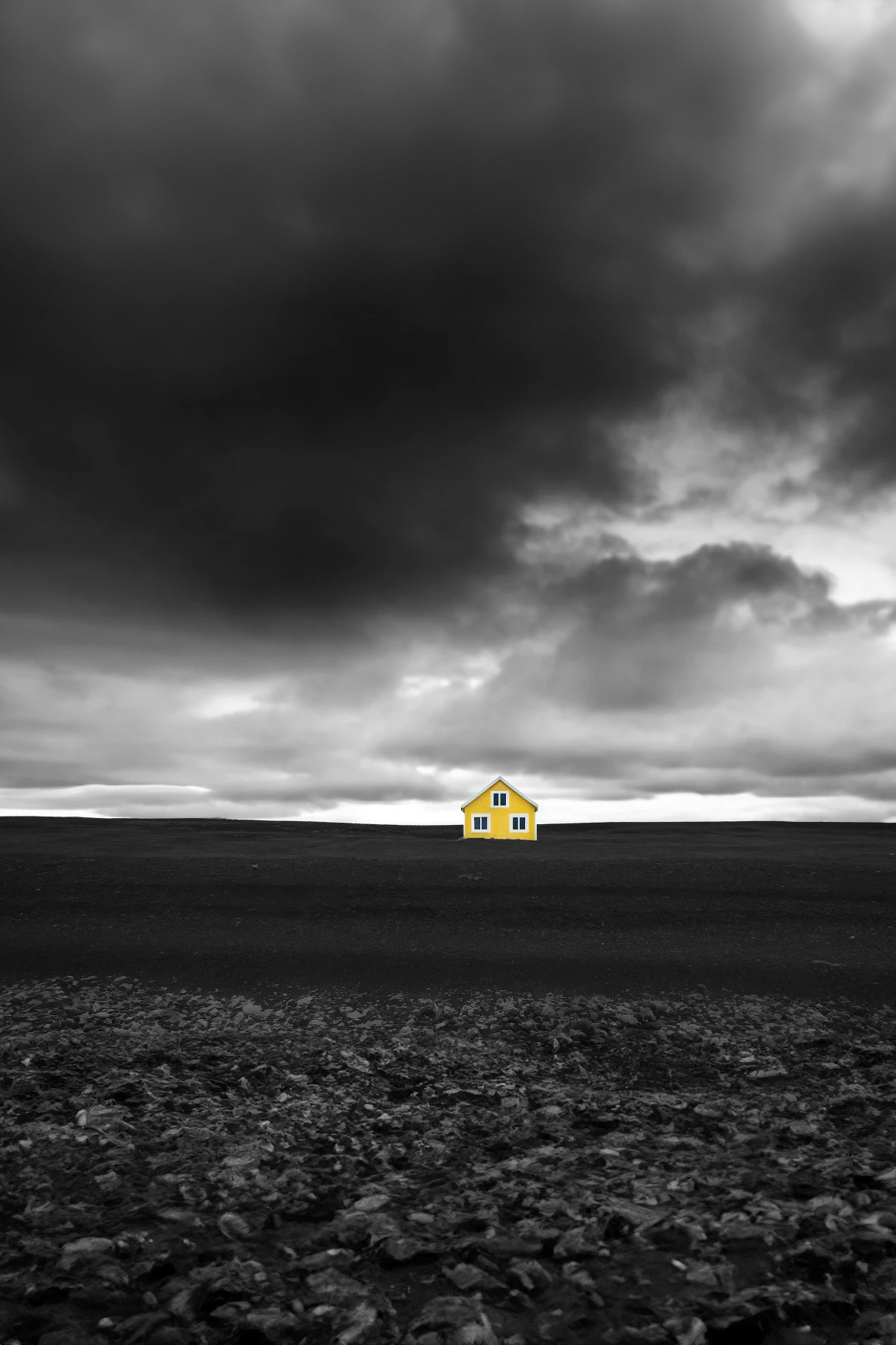
Size and height
- Narrow corridor (under about 120 cm wide): stay with 40×30 cm prints in slim frames, 2–3 cm deep, so nobody brushes them with a shoulder or a bag. Large works need distance you do not have.
- Above a console: aim for about two-thirds of its width and leave 20–25 cm between the top of the console and the bottom of the frame. A 90 cm console takes one 60×40 cm print or two 40×30 cm prints side by side.
- A row along the wall: keep 8–10 cm between frames and line up their centres, not their tops, at 145 cm. Three framed 40×30 cm prints come to about 120–130 cm wide.
- Height: centre the work at about 145 cm, the standard for standing eyes. On a staircase, follow the slope; our guide to hanging art at the right height explains both rules.
Light, doors and coats
- Mind the door swing. Keep frames clear of the arc of any door that opens against the wall, and of light switches and the intercom.
- Acrylic rather than glass. Prints arrive unframed. In a hallway, where people pass close with bags, prams and children, acrylic glazing is lighter and does not shatter.
- Not above the radiator or the coat hooks. Heat and wet coats are the two enemies of paper. Hang on another stretch of wall, or at least 30 cm away.
- Use the light you have. Most hallways are dim. High-contrast black-and-white or a single strong colour reads at a glance under one ceiling lamp; a small picture light over the end wall turns it into the destination.
Ready before the guests arrive
If you are hosting over the holidays, order early enough to frame and hang the work before the first knock on the door. On our standard delivery estimate a print ordered by 18 December arrives before Christmas within the Netherlands, by 11 December elsewhere in the EU, and by 8 December for the UK, Switzerland, Norway, Iceland or the United States, but framing takes a few days more, so earlier is better. A hallway print is also an easy present for someone who has just moved; see the Christmas gift guide.
Every print is a hand-signed limited edition of 25 on premium photographic paper, posted unframed from Amsterdam, with free EU delivery on orders over €95. Start with art under €100 for a first piece, or browse the full gallery.
Frequently asked questions
- What kind of art is best for a hallway?
- Work that rewards a short, close look: a strong composition, a single figure or a graphic idea. A hallway is seen from half a metre away and on the move, so detail and a clear idea matter more than size. Black and white and one strong colour both read well in the low light of most hallways.
- What size art for a narrow hallway?
- In a corridor under about 120 cm wide, stay with 40×30 cm prints in slim frames 2–3 cm deep. You cannot step back far enough to take in a large work, and deep frames get knocked by shoulders and bags. A row of three small prints gives more than one large one.
- How high should art be hung in a hallway?
- Centre it at about 145 cm from the floor, the standard height for standing eyes. Above a console, leave 20–25 cm between the console and the bottom of the frame. On a staircase, let the line of art follow the slope of the stairs instead of hanging a level row.
- Should hallway art be one piece or several?
- Both work, in different places. The wall at the end of a corridor suits one piece, because it is the only hallway wall you see from a distance. Along the corridor, a row of two or three related works at even spacing suits the way you walk past them.
- Is a hallway a safe place for a print?
- Yes, framed behind acrylic and away from radiators and wet coats. Acrylic is lighter than glass and does not shatter if a frame is knocked. Keep frames clear of the door swing and of light switches.